
Choosing the right bulb for your glass bubble light chandelier is very important. You should think about a few key things:
-
Energy Efficiency: LED bulbs use about 75% less energy than traditional ones.
-
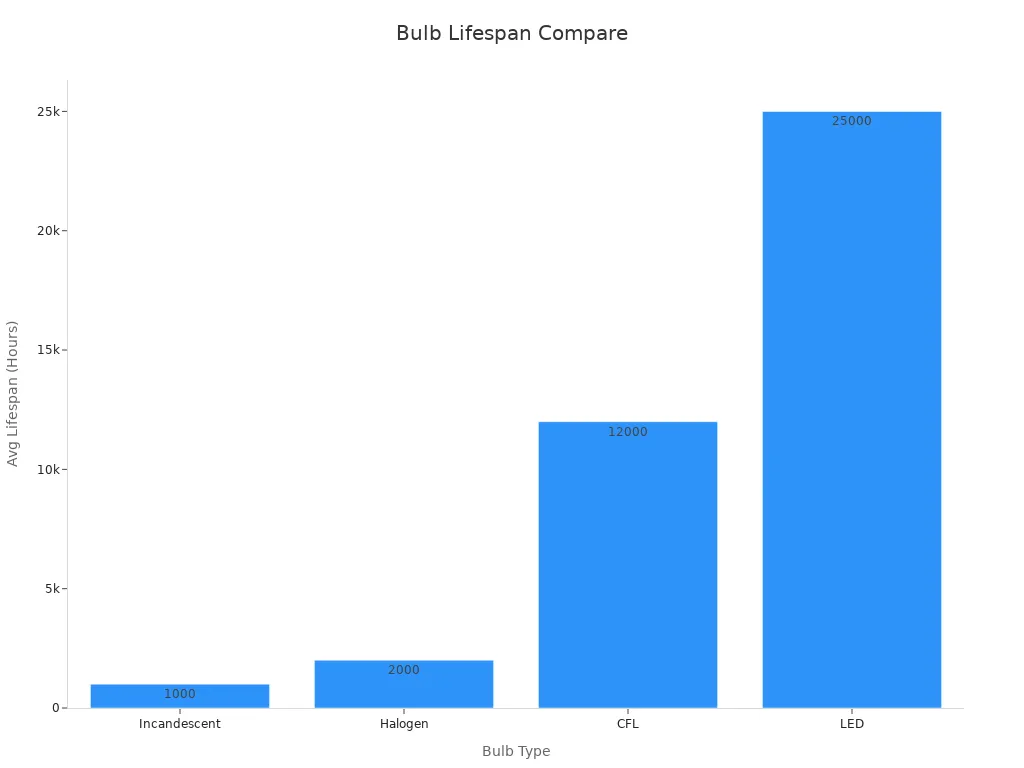
Lifespan: LEDs can last up to 50,000 hours. Incandescent bulbs usually last only about 1,000 hours.
-
Light Quality: Different bulbs create special lighting effects. These can make your chandelier look better.
-
Cost: LEDs might cost more at first. But they save money on energy and maintenance over time.
This light comparison guide will help you choose between LED and traditional bulbs easily.
Key Takeaways
-
LED bulbs use up to 90% less energy. They last up to 25 times longer than regular bulbs. This helps lower your electricity bills and replacement costs.
-
Regular bulbs give a warm, cozy light. However, they burn out quickly. This means you will spend more money over time because you need to replace them often.
-
LED bulbs provide bright light and many color choices. This allows you to create the perfect mood for any room or event.
-
Even though LED bulbs cost more at first, they save you money later. This is because they use less energy and need fewer replacements.
-
Picking the right bulb depends on your style and needs. LED bulbs work well for modern, flexible lighting. Traditional bulbs are better for classic, warm designs.
Efficiency
LED Benefits
When you think about energy efficiency, LED bulbs are a better choice for your glass bubble light chandelier. These light-emitting diodes can help you save a lot on your electricity bills. Studies show that LED bulbs are 80-90% more energy-efficient than traditional incandescent bulbs. This means incandescent bulbs waste about 80-90% of their energy as heat. In contrast, LEDs turn about 95% of their energy into light.
Here’s a quick comparison of energy efficiency improvements:
|
Bulb Type Comparison |
Energy Efficiency Improvement (%) |
|---|---|
|
LED vs. 4-foot fluorescent tubes |
Up to 44% more efficient |
|
LED vs. T8 fluorescent lamps |
18% to 44% more efficient |
|
LED vs. fluorescent (DOE indication) |
About 25% more efficient |
By switching to energy-efficient LED options, you lower your energy costs and help the environment. Using less energy means less greenhouse gas emissions. This is important for fighting climate change.
Traditional Bulb Drawbacks
On the other hand, traditional incandescent bulbs have many problems. They only change about 10% of energy into light, losing almost 90% as heat. This waste leads to higher energy use and bigger electricity bills. For example, changing a 36W fluorescent lamp to a 20W LED can save you about $288 over five years.
Also, incandescent bulbs add a lot to your carbon footprint. Changing your lights to energy-efficient options like LEDs can greatly lower your home’s energy needs. Experts say that if every household replaced just one incandescent bulb with a CFL, it could stop greenhouse gas emissions equal to those from 800,000 cars each year.
Lifespan
LED Longevity
LED bulbs are great for lasting a long time. They can last between 25,000 to 50,000 hours. This means you won’t need to change them often. If you use your chandelier for about three hours each day, one LED bulb can last up to 13 years. This long life means fewer trips to the store and less trouble changing bulbs.
Here’s a quick look at lifespan and costs:
|
Parameter |
LED Bulb |
Incandescent Bulb |
|---|---|---|
|
Rated Lifespan (3 hrs/day) |
13 years |
1.1 years |
|
Number of Bulbs in 13 yrs |
1 |
~12 |
|
Total Bulb Cost (13 yrs) |
$10.00 |
$24.00 |
|
Annual Energy Cost |
About $1.08 (estimated) |
$12.05 |
|
Total Energy Cost (13 yrs) |
About $14.00 |
$157.00 |
|
Total Cost (Bulb + Energy) |
$24.00 |
$181.00 |
This chart shows that you will only need to replace an LED bulb once in 13 years. In contrast, you will need about 12 incandescent bulbs in the same time. The savings really add up over the years.
Traditional Bulb Lifespan
On the other hand, traditional incandescent bulbs do not last long. They usually last around 1,000 hours, so you might have to replace them every year. This can be annoying and cost you more money.
Tip: If you pick incandescent bulbs, be ready for regular changes. You should keep extra bulbs handy to avoid being left in the dark.
Incandescent bulbs are also fragile. They can break easily because of their thin glass. In comparison, LED bulbs are tougher and can handle shocks and vibrations better. This strength means they are less likely to break and need replacing.
Lighting Quality
LED Illumination
When you think about lighting quality, LED bulbs are great in many ways. They are brighter and use less energy. This means you get more light for the same amount of energy. For example, LED bulbs can give off about 80-100 lumens per watt. In contrast, incandescent bulbs only give off about 10 lumens per watt.
Here’s a quick comparison of brightness and color temperature:
|
Feature |
LED Bulbs |
Incandescent Bulbs |
|---|---|---|
|
Brightness Efficiency |
Higher lumens per watt; more energy efficient |
About 10 lumens per watt; 90% energy lost as heat |
|
Color Temperature Range |
Wide range: warm (<3000K) to cool (>6000K) |
Warm range: usually 2700K-3000K |
|
Color Rendering Index (CRI) |
Different, 65-98 based on LED type |
Excellent, nearly perfect CRI (~100) |
LEDs also come in many color temperatures. You can pick warm white (2700K-3000K) for a cozy feel or cooler temperatures (4000K-6500K) for a lively atmosphere. A study found that cooler colors (6500K) help people work better and see more clearly. This choice lets you adjust the lighting for your needs, whether you want a bright workspace or a calm living area.
Traditional Bulb Ambiance
On the other hand, traditional incandescent bulbs give off a warm, friendly glow. They make light by heating a wire, which results in a low color temperature between 1500 and 2700 Kelvin. This warm light creates a cozy feeling, perfect for living and dining rooms where you want a nice atmosphere.
While LED bulbs can also create warmth with warm white options, they often give off cooler light that feels less welcoming. Traditional bulbs are great at showing colors accurately, with a near-perfect CRI of about 100. This means they show colors better, making your chandelier look nicer.
Tip: If you want to keep a cozy feel in your chandelier, think about using warm white LED bulbs. They can give you the warm glow of traditional bulbs while being energy-efficient.
Cost Comparison
LED Costs
When you look at the costs of LED bulbs, you will see they cost more at first than traditional incandescent bulbs. For example, LED candelabra bulbs usually cost between $2.00 and $4.00 each. But this extra money is worth it over time. LED bulbs can last up to 25,000 hours. That is about 25 times longer than incandescent bulbs, which last around 1,000 hours.
Here’s a quick comparison of costs:
|
Metric |
LED Bulbs |
Traditional Bulbs |
|---|---|---|
|
Initial Cost |
Higher upfront cost |
Lower upfront cost |
|
Lifespan |
Up to 25,000 hours |
Around 1,000 hours |
|
Energy Savings |
Uses 75% less electricity |
Baseline (100%) |
|
Replacement Frequency |
Much less frequent |
Frequent replacements needed |
|
Long-term Energy Cost |
Significantly reduced bills |
Higher due to energy use |
By choosing LED options, you can save about $100 or more during the life of each bulb. This savings comes from using less electricity and needing fewer replacements.
Traditional Bulb Costs
On the other hand, traditional incandescent bulbs have a lower initial cost, usually about $1.00 each. But they do not last long, so you will need to replace them often. Over time, these costs can add up. For example, if you switch a 60-watt incandescent bulb for a 9-watt LED, you will save a lot on your energy bills.
Tip: Think about budget-friendly choices like Remshep chandeliers. They mix artistic design with energy-saving lighting. Buying a Remshep chandelier with LED bulbs can improve your space while keeping costs low.
Design Compatibility
LED in Design
When you think about the design of your glass bubble light chandelier, LED bulbs are very flexible. Modern chandeliers use new LED technology. This allows for dimming and changing colors. You can set the right mood for any event. Switch from a warm light for cozy dinners to a bright light for fun parties.
Using LED bulbs also helps the environment. They use less energy and last longer than traditional bulbs. This means you can enjoy beautiful designs without changing bulbs often. Many new chandeliers even have smart controls. You can change the brightness and color using apps or voice commands. This makes it easy to use and fits well in your smart home.
On the other hand, traditional bulbs have a classic look that many people like. Their warm light makes a cozy feeling, great for small gatherings. But they don’t have the same flexibility as LED bulbs. While traditional bulbs can add charm to a bubble pendant light, they don’t offer as many brightness or color choices.
If you want a timeless style, traditional bulbs can still work in your bubble pendant light chandelier. They look great in vintage or rustic designs. However, you might miss the energy savings and long life that LED bulbs give.
In the end, choosing between LED and traditional bulbs depends on your style and the mood you want. Whether you prefer a modern look with LED or a classic feel with traditional bulbs, both can make your chandelier look beautiful.
Maintenance
LED Maintenance
Taking care of LED bulbs is easy. You won’t need to change them often. Here are some tips to keep your LED bulbs bright:
-
Clean Regularly: Dust can build up on the bulbs and make them dim. Use a soft, dry cloth to clean them.
-
Check Connections: Make sure the bulbs fit tightly in their sockets. Loose connections can cause flickering or dim lights.
-
Avoid Overheating: Ensure your bubble pendant light has good airflow. LEDs produce less heat, but good ventilation helps them last longer.
Putting LED bulbs in your bubble pendant light is simple. Most LED bulbs fit standard sockets, so just screw them in, and you can enjoy energy-saving lighting.
Traditional Bulb Care
Taking care of traditional incandescent bulbs needs more attention. Here are some tips for maintenance:
-
Handle with Care: Incandescent bulbs are delicate. Always handle them gently to prevent breaking.
-
Replace Regularly: These bulbs don’t last long, so keep extra bulbs nearby. This way, you can quickly swap out any burnt-out bulbs.
-
Check for Flickering: If you see flickering, it might mean there’s a problem with the bulb or the fixture. Check both to make sure everything works well.
Installing traditional bulbs in your bubble pendant light is also easy. Just screw them into the socket, but remember to turn off the power first to avoid accidents.
Tip: Whether you pick LED or traditional bulbs, regular care keeps your bubble pendant light chandelier looking great in your home.
In conclusion, picking the right bulb for your chandelier is very important. It can affect energy use, how long the bulbs last, and how much you spend. Here are the main points to think about:
-
LED bulbs can last up to 25,000 hours and use up to 90% less energy than incandescent bulbs. This means you will pay less for electricity and change them less often.
-
Traditional bulbs create a warm light but only last about 1,000 hours. They cost less at first but can lead to higher costs later because you have to replace them often.
When choosing a bulb, consider what you need most. If saving energy and having long-lasting bulbs is important, go for LED bulbs. If you want a warm and cozy feel, traditional bulbs might be better for you. In the end, find a good mix of looks and function to make your chandelier beautiful and efficient.
FAQ
What type of bulb is best for a glass bubble light chandelier?
LED bulbs are usually the best choice. They save energy, last a long time, and offer different lighting options. You can enjoy nice lighting while saving money on energy bills.
Can I use traditional bulbs in my chandelier?
Yes, you can use traditional incandescent bulbs. They give off a warm light but do not last as long and cost more to run than LEDs.
How do I choose the right color temperature for my chandelier?
Pick a color temperature based on the mood you want. Warm white (2700K-3000K) makes a cozy feel, while cooler temperatures (4000K-6500K) create a bright and lively atmosphere.
Are LED bulbs dimmable?
Many LED bulbs can be dimmed, but check the packaging first. Make sure your chandelier's dimmer switch works with LED bulbs for the best results.
How often should I replace my bulbs?
If you use LED bulbs, you might not need to change them for up to 25,000 hours. Traditional bulbs usually last about 1,000 hours, so you will need to replace them more often.
Blog comments
0 Comments