
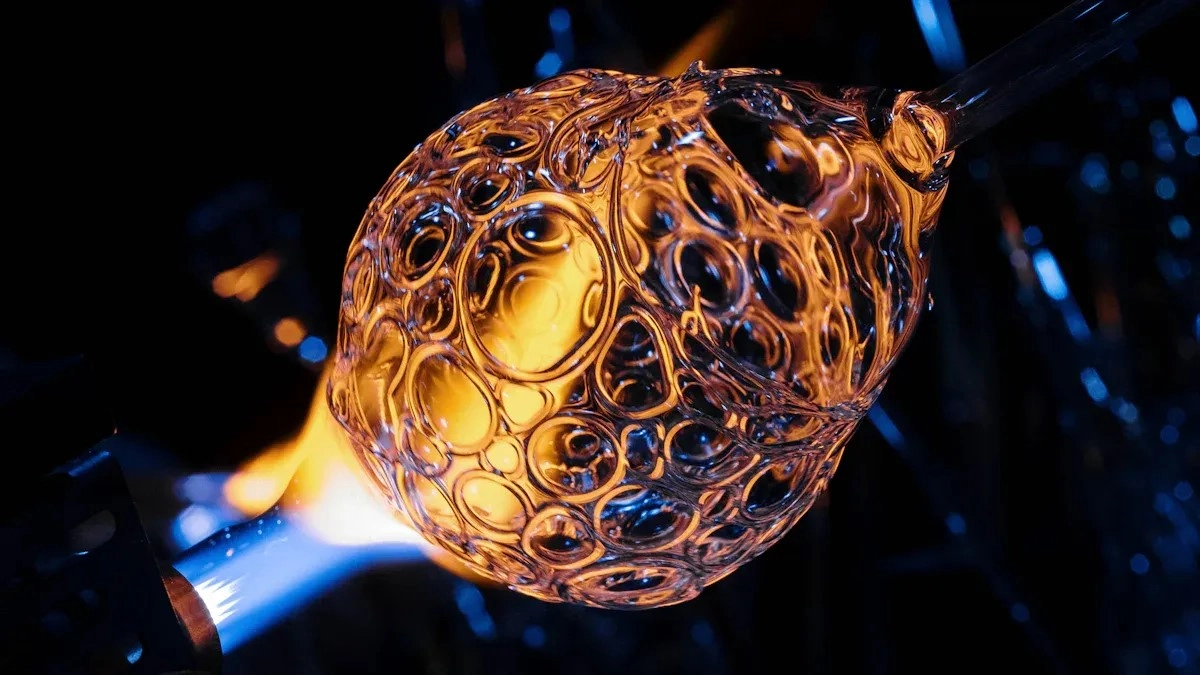
You see bold colors and dramatic forms in Chihuly glass art. These pieces often use teamwork in large installations, which makes them stand out. Murano glass, on the other hand, shows centuries of tradition. Skilled artisans create each piece by hand, focusing on classic patterns and quality. The differences in Chihuly vs. Murano styles become clear when you look at modern designs like the Remshep Blue Chihuly Style Murano Glass Chandelier. This chandelier blends lively colors and shapes, showing how Chihuly’s inspiration from Murano glassmaking brings new energy to contemporary glass art.
Key Takeaways
-
Chihuly glass art features bold colors and organic shapes, creating a vibrant and dynamic experience.
-
Murano glass art showcases centuries of tradition, emphasizing detailed craftsmanship and classic patterns.
-
When choosing glass art, consider your style: Chihuly for dramatic statements, Murano for timeless elegance.
-
Both Chihuly and Murano glass can enhance home decor, blending modern and traditional elements for unique designs.
-
Collectors value unique designs and craftsmanship, with Chihuly pieces often attracting attention for their scale and innovation.
Chihuly Glass Art
Chihuly Style
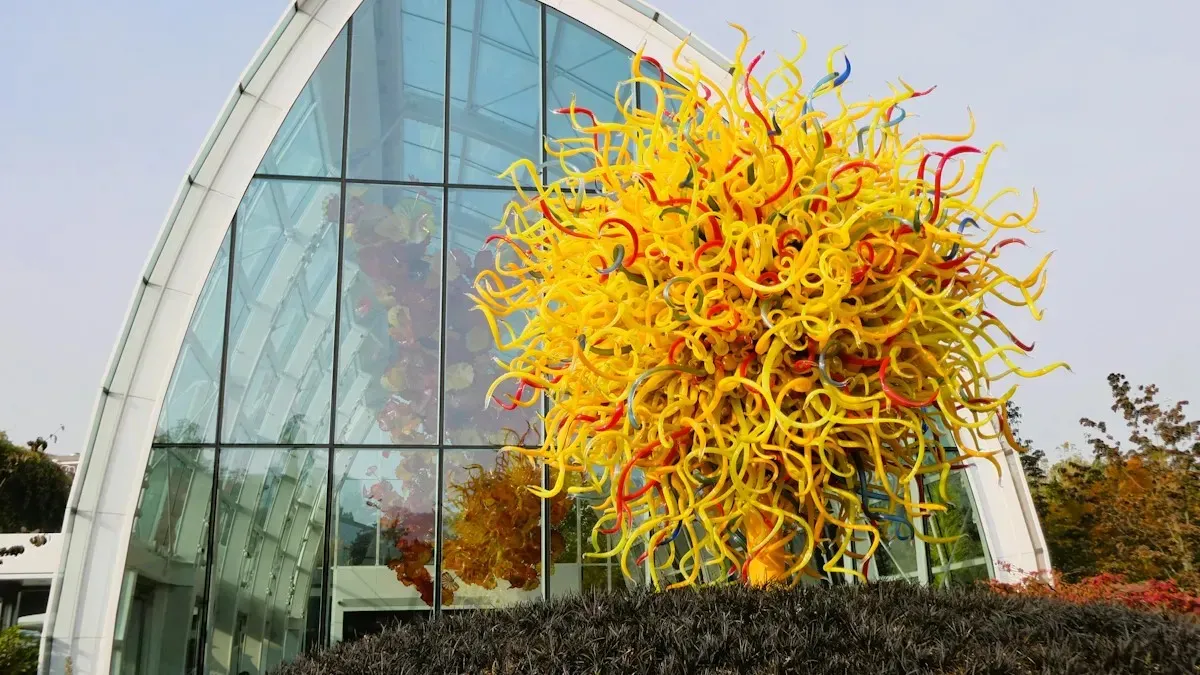
When you look at Chihuly glass art, you see a world full of color, movement, and light. Chihuly’s style stands out because he uses bold colors and organic shapes that remind you of plants or sea creatures. His pieces often fill large spaces, making you feel like you are stepping into another world. The way he plays with light and glass creates reflections and shadows that change as you move around the artwork. This approach gives each piece a sense of life and energy.
Here is a table that shows what makes Chihuly’s style unique:
|
Characteristic |
Description |
|---|---|
|
Unique Approach to Color |
Uses vibrant colors for dramatic effects |
|
Organic Forms |
Shapes often look like plants or underwater life |
|
Interplay of Light and Glass |
Focuses on transparency and reflection |
|
Collaborative Glass-Blowing |
Works with teams to create large installations |
|
Emotional and Visual Effects |
Evokes strong feelings with elegant and extravagant designs |
You can see these features in many of his famous installations. The large scale and bright colors make his work easy to recognize. When you compare Chihuly vs. Murano, you notice that Chihuly’s style feels more modern and expressive.
Chihuly Technique
Chihuly’s technique combines innovation with tradition. He draws inspiration from Murano glassmakers, especially in his Venetian series. In this series, he experiments with the merletto method, which comes from the Italian word for lace. This technique uses fine glass canes to create patterns that look like lace inside the glass.
-
Chihuly’s Merletto Baskets use swirling glass canes to form intricate, lace-like designs.
-
The patterns flow around the baskets, giving them a sense of movement.
-
He does not follow the strict, static patterns of old Murano glass. Instead, he lets the lines move and twist, making each piece unique.
-
The process involves fusing many thin, opaque threads into the glass, which takes great skill and patience.
Chihuly’s work shows how you can take old methods and make them new again. His style and technique help set him apart in the world of glass art.
Murano Glass Art
Murano Style
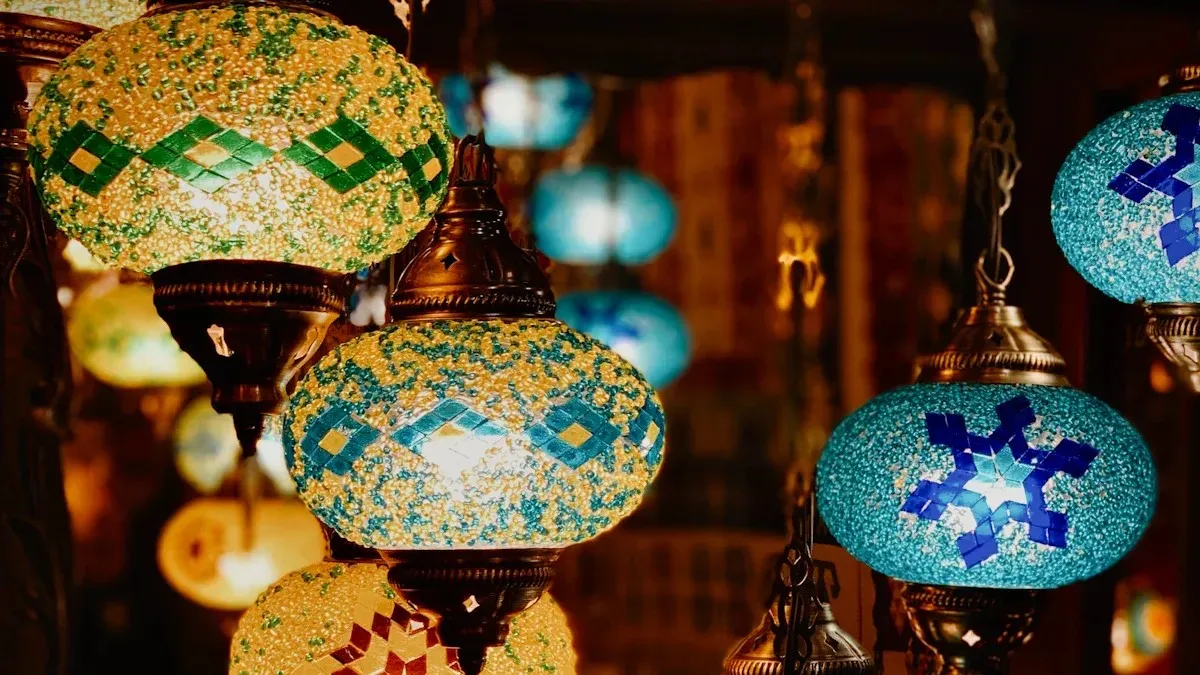
You see Murano glass art as a showcase of tradition and skill. Murano artisans use patterns and motifs that have become famous around the world. Each piece tells a story through its colors, shapes, and textures. You can spot Murano glass by its detailed designs and rich craftsmanship.
Here is a table that shows some of the most recognizable patterns and techniques in Murano glass art:
|
Technique |
Description |
|---|---|
|
Millefiori |
Patterns made with multicolored glass rods, forming floral or geometric designs. |
|
Reticello |
Net-like patterns created by twisting thin glass threads, giving a lace-like look. |
|
Glass Tesserae |
Mosaic patterns made from small, colored glass squares. |
|
Iridescence |
Rainbow sheen from metal oxides, used for decorative effects. |
|
Macette |
Layered colored glass canes for intricate, precise patterns. |
|
Pulegoso |
Frothy texture from gas bubbles, adding a unique feel. |
|
Rigadin |
Ribbed or fluted patterns on the glass surface. |
|
Gold and Silver Leaf |
Thin sheets of precious metals for a brilliant, metallic shine and rich texture. |
You notice that Murano glass often combines several techniques in one piece. This creates art that feels both classic and fresh. The style stands out in the Chihuly vs. Murano comparison because Murano glass focuses on tradition and detail.
Murano Technique
Murano glassmaking began during the Byzantine era. You find its roots in cultural exchanges with craftsmen from Egypt and Syria. The Venetian Senate moved glassmakers to Murano in 1291. This made Murano the center of glass art. Artisans gained high status and privileges. By the 16th century, Murano led the world in glassmaking. The guild system helped preserve techniques and patterns.
You see Murano glass in trade beads, luxury collectibles, and decorative items. These beads traveled across Africa and North America, showing Murano’s global influence. Murano glass survived plagues and economic changes. Families and entrepreneurs revived the craft in the 19th century. Today, you find Murano glass blending old methods with modern design. Artisans keep the tradition alive, making Murano glass a symbol of artistic excellence.
Murano glass art shows you what centuries of skill and creativity can achieve. You see its influence in homes, museums, and modern products. The Chihuly vs. Murano debate highlights how tradition and innovation shape glass art.
Chihuly vs. Murano Comparison
Style Differences
You notice clear differences when you compare Chihuly vs. Murano glass styles. Chihuly glass art grabs your attention with bold colors and large, sprawling forms. Murano glass art shows elegance through smaller, refined pieces and detailed craftsmanship. Both styles reflect their origins and artistic goals.
Here is a table that helps you see the most visually apparent differences:
|
Aspect |
Chihuly Glass Style |
Murano Glass Style |
|---|---|---|
|
Inspiration |
Nature and reality, with a contemporary twist |
Traditional Venetian techniques and designs |
|
Visual Characteristics |
Colorful, large-scale installations, intricate designs |
Elegant, often smaller pieces with detailed craftsmanship |
|
Artistic Approach |
Expansive and fantastical interpretations of glass art |
Classic and refined, rooted in historical techniques |
Chihuly uses vibrant, flamboyant colors and active, organic shapes. Murano glassmakers prefer traditional, elegant colors and symmetrical forms. You see Chihuly’s creativity in his installations, while Murano glass highlights conventional craftsmanship.
|
Aspect |
Chihuly's Work |
Traditional Murano Glass |
|---|---|---|
|
Color Palette |
Vibrant, flamboyant colors |
More traditional, elegant colors |
|
Form |
Active, sprawling designs |
Symmetrical, historical forms |
|
Design |
Nature and creativity |
Conventional craftsmanship |
The Remshep Blue Chihuly Style Murano Glass Chandelier shows you how these styles blend. The chandelier features hand-blown glass, vibrant blue colors, and organic shapes. The ombré effect, moving from deep blue to clear, adds depth and visual movement. You see both Chihuly’s influence and Murano’s tradition in this modern piece.
You can spot Chihuly’s style by its boldness and scale. Murano glass stands out for its elegance and attention to detail. The Chihuly vs. Murano comparison helps you understand what makes each style unique.
Technique Differences
You find important differences in how Chihuly and Murano glassmakers create their art. Chihuly’s technique relies on teamwork and innovation. He directs teams to build large installations. He experiments with traditional Murano methods, like merletto, but adds his own twist. His Seaforms series blends Murano techniques with modern artistic elements.
Murano glassmakers focus on classical skills. They use centuries-old methods, such as millefiori and reticello, to produce precise patterns. Murano artisans constantly innovate, pushing the boundaries of glassmaking while keeping their roots in tradition.
The Remshep chandelier combines these techniques. You see hand-blown glass, a hallmark of Murano craftsmanship. The vibrant colors and organic shapes reflect Chihuly’s influence. The ombré effect is a signature technique that adds visual movement.
-
The chandelier features hand-blown glass, showing Murano skill.
-
It uses vibrant colors and organic shapes, inspired by Chihuly.
-
The ombré effect adds depth and movement, blending both traditions.
Chihuly’s work draws inspiration from Murano but remains distinct. His sculptures use organic shapes and luminous colors. They interact with the landscape, creating a sense of exploration and discovery. Murano glass art focuses on refinement and historical patterns.
Critics and art historians see Chihuly’s art as imaginative and vibrant. Murano glass is valued for its grace and elegance. Both styles have artistic merit, but they appeal to different tastes.
Innovation plays a big role in both traditions. Chihuly moved from personal glassblowing to directing teams, allowing for larger projects. Murano glassmakers experiment with new techniques and styles, blending old and new.
You can learn about these differences in educational programs. Chihuly’s Pilchuck Glass School offers courses in digital technologies and innovative practices. Murano glass schools teach classical skills and traditional craftsmanship.
|
Aspect |
Pilchuck Glass School |
Murano Glass Schools |
|---|---|---|
|
Focus |
Primarily on glass, with a history of inviting artists from other media. |
Traditional glass techniques. |
|
Course Offerings |
Expanded to include digital technologies and innovative glassmaking practices. |
Focus on classical glassmaking skills. |
|
Artist Involvement |
Features artists-in-residence and collaborations with various artists. |
Typically emphasizes traditional craftsmanship. |
You see that Chihuly vs. Murano is not just a comparison of style. It is also a comparison of technique and innovation. The Remshep chandelier shows you how these traditions can blend to create something new and exciting.
Impact and Relevance
For Collectors
You see important differences when you collect glass art. Chihuly’s work stands out for its innovation and large-scale installations. You experience bold colors and light in his pieces. Murano glass offers a rich tradition of craftsmanship. Each piece reflects European style and appeals to those who value history and culture.
Collectors often look for certain qualities:
-
High-quality materials make a piece more beautiful and durable.
-
Unique designs and skilled craftsmanship increase value.
-
Larger pieces attract more attention and can be worth more.
-
Older pieces with a clear history are often more valuable.
-
Market trends can change how much a piece is worth.
-
Well-kept pieces hold their value better.
-
Rare or limited pieces are more desirable.
-
Where you display the piece can add to its value.
Murano glass objects often come in small numbers. These pieces show creative skill and serve as tasteful accents in modern homes. When you compare Chihuly vs. Murano, you see that each style offers something special for collectors.
In Contemporary Design
You find that both Chihuly and Murano glass art play a big role in today’s home decor. Designers often mix styles, pairing vintage chandeliers with modern furniture. This creates a unique and welcoming space. Color also matters. A bold chandelier, like the Remshep Blue Chihuly Style Murano Glass Chandelier, can become the focal point of a room.
Layering lighting is another trend. You can use a vintage chandelier with modern fixtures to create a warm atmosphere. About one-third of designers now choose maximalist and eclectic styles. Most homeowners believe that a well-placed chandelier can improve their home’s design.
Here is a table that shows what makes Murano and Chihuly glass popular in homes:
|
Feature |
Murano Glass |
Chihuly Glass |
|---|---|---|
|
Craftsmanship |
Hand-blown techniques create unique shapes |
Creative techniques with unique shapes |
|
Use of Color |
Bright colors enhance beauty |
Rich colors and layering add depth |
|
Attention to Detail |
Detailed designs reflect quality craftsmanship |
Interaction with light enhances mood |
|
Popularity |
Sought after for elegance in home decor |
Known for artistic statement in luxury spaces |
Lisa Eldred, Director of Exhibitions at Denver Botanic Gardens, said, “The colors and forms of the Chihuly works appeal to a broad audience. Without an obvious narrative to the work, visitors were able to simply enjoy the artwork without committing a lot of time to understanding a storyline or intended ‘meaning.’”
You see that products like the Remshep chandelier bring the best of both worlds into your home. They blend tradition and innovation, making glass art relevant for collectors, art lovers, and interior designers today.
You see clear differences between Chihuly and Murano glass. Chihuly glass uses bold colors and large, organic forms. Murano glass shows tradition with detailed patterns and classic shapes. If you want a dramatic centerpiece, Chihuly-inspired pieces like the Remshep chandelier fit modern spaces. For timeless elegance, Murano glass suits classic decor.
-
Many artists now use glass in new ways, blending old and new techniques.
-
Museums highlight glass as fine art, not just decoration.
-
Collectors show growing interest in glass that combines tradition and innovation.
FAQ
What makes Chihuly glass art unique?
You see Chihuly glass art stand out for its bold colors and large, organic shapes. The pieces often fill big spaces and use light in creative ways. Each work feels alive and full of energy.
What defines Murano glass art?
You find Murano glass art known for its detailed patterns and classic designs. Artisans use hand-blown techniques passed down for centuries. Each piece shows tradition and careful craftsmanship.
What is the main difference between Chihuly and Murano glass?
You notice Chihuly glass uses modern, expressive forms and bright colors. Murano glass focuses on traditional patterns and elegant shapes. Each style offers a different look and feel for your space.
What should you consider when choosing between Chihuly and Murano styles?
You should think about your home’s style and your taste. If you want a dramatic centerpiece, choose Chihuly-inspired art. If you prefer timeless elegance, Murano glass fits well.
What is a Chihuly Style Murano Glass Chandelier?
You see a Chihuly Style Murano Glass Chandelier blend bold colors and organic shapes with traditional Murano craftsmanship. This type of chandelier, like the Remshep Blue Chihuly Style Murano Glass Chandelier, brings both innovation and tradition into your home.
Blog comments
0 Comments